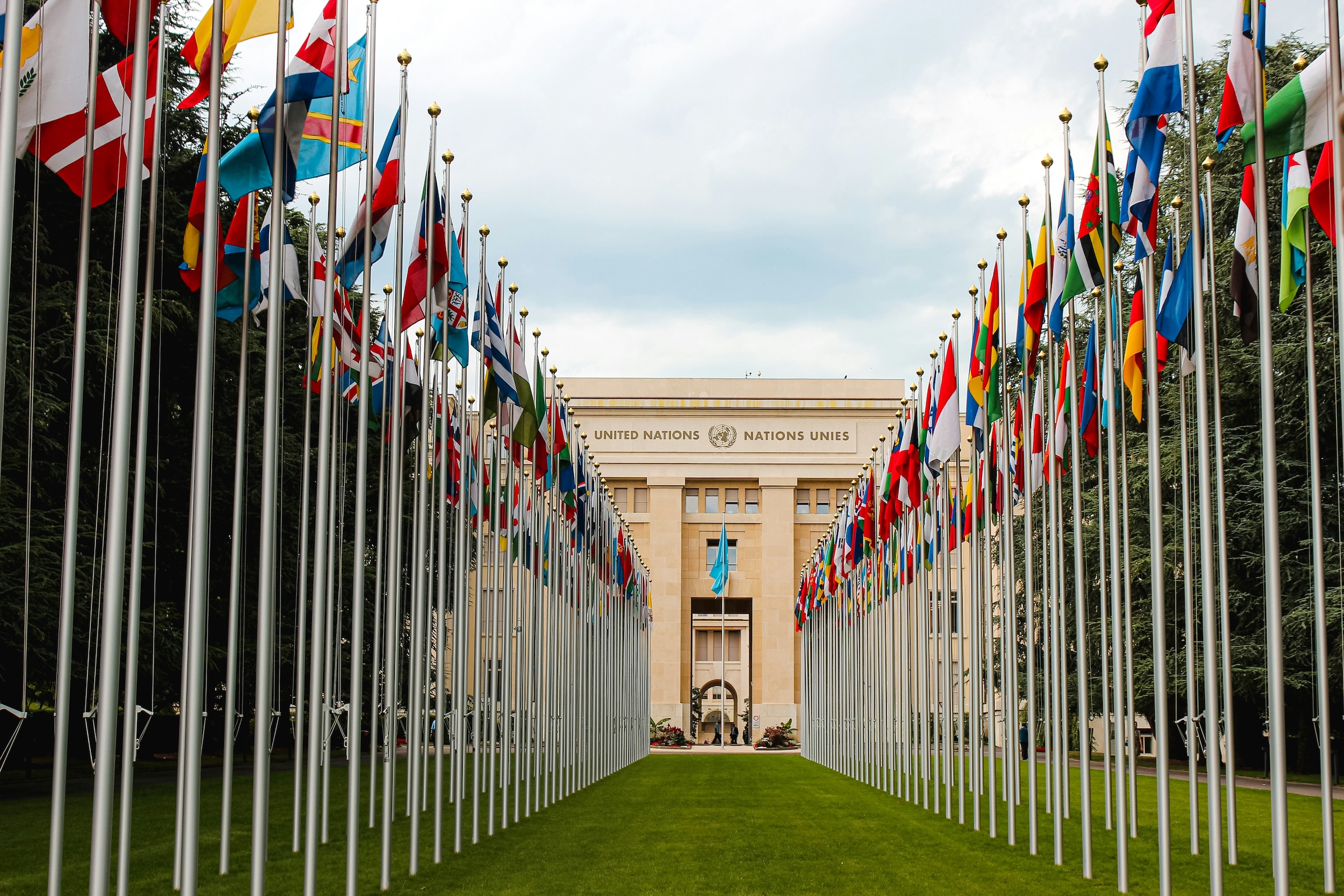
International law, treaty obligations, and the hard-won lessons of the twentieth century.
I. A Civilisation Built on Law
Modern democratic civilisation did not emerge by accident. It was constructed, deliberately and painstakingly, on the ruins of two world wars, the Holocaust, colonial atrocity, and totalitarian catastrophe. The founding architects of the post-1945 international order made a simple but revolutionary decision: that certain acts — genocide, aggressive war, apartheid, the systematic violation of human rights — would no longer be treated as the internal affairs of sovereign states. They would be crimes. Universal crimes. Crimes for which individuals, governments, and states would be held accountable.
That architecture rests on several pillars, each legally binding on its signatories. Europe helped build those pillars. Europe must now defend them.
II. The Legal Framework: What the World Has Agreed
The United Nations Charter (1945)
The Charter of the United Nations, signed on 26 June 1945 and in force since 24 October 1945, is the foundational treaty of the contemporary international order. Its 193 current member states — representing virtually every recognised nation on Earth — have bound themselves to its principles.
Article 2(4) is unambiguous: “All Members shall refrain in their international relations from the threat or use of force against the territorial integrity or political independence of any state.” Wars of aggression are not merely inadvisable. They are illegal under the highest international legal instrument in existence.
Article 1 states that the purposes of the United Nations include maintaining international peace and security, developing friendly relations among nations based on the principle of equal rights and self-determination of peoples, and promoting respect for human rights and fundamental freedoms without distinction as to race, sex, language, or religion.
The 193 current UN Member States include every major power on earth. There is no legitimate state that stands outside this framework.
The Universal Declaration of Human Rights (1948)
On 10 December 1948, the United Nations General Assembly adopted the Universal Declaration of Human Rights (UDHR) — Resolution 217A — with 48 votes in favour, zero against, and eight abstentions. It was not adopted as a binding treaty; it was proclaimed as a common standard of achievement for all peoples and all nations. In the decades since, its core provisions have acquired the status of customary international law, binding on all states regardless of explicit signature.
Article 1: “All human beings are born free and equal in dignity and rights.”
Article 2: No distinction shall be made on the basis of race, colour, sex, language, religion, political or other opinion, national or social origin, property, birth or other status.
Article 7: All are equal before the law and entitled without any discrimination to equal protection of the law.
These are not aspirations. They are the legal floor beneath which no state has the right to descend.
The Geneva Conventions (1949) and Their Additional Protocols
The four Geneva Conventions of 12 August 1949 represent one of the most universally ratified bodies of international law in existence. As of 2024, all 196 states recognised by the international community are party to the Geneva Conventions — a degree of ratification unmatched by virtually any other international legal instrument.
The Conventions regulate the conduct of armed conflict and the protection of those who do not — or no longer — participate in hostilities: wounded and sick soldiers, prisoners of war, and civilians. Common Article 3, which applies to non-international armed conflicts, prohibits violence to life and person, cruel treatment, torture, the taking of hostages, and the denial of fair trial.
Additional Protocol I (1977), ratified by 174 states, extends protections to civilian populations in international armed conflicts. Protocol II, ratified by 169 states, covers non-international conflicts. Protocol III (2005), on the additional distinctive emblem, has 80 states parties.
Grave breaches of the Geneva Conventions — including wilful killing, torture, and the extensive destruction of civilian property not justified by military necessity — are war crimes under international law. States are not merely permitted to prosecute such crimes; under the principle of aut dedere aut judicare (extradite or prosecute), they are obligated to do so.
The Convention on the Prevention and Punishment of the Crime of Genocide (1948)
The Genocide Convention, adopted by the UN General Assembly on 9 December 1948 and in force since 1951, currently has 153 states parties. Under Article 1, the contracting parties confirm that genocide — whether committed in time of peace or war — is a crime under international law which they undertake to prevent and to punish.
Genocide is defined as acts committed with intent to destroy, in whole or in part, a national, ethnical, racial or religious group. Forcible transfer of children and deliberately inflicting conditions of life calculated to bring about a group’s physical destruction are explicitly included.
There are no exceptions. There are no exemptions for great powers, regional powers, or any state’s claimed security interests.
The Rome Statute and the International Criminal Court (1998)
The Rome Statute of the International Criminal Court, adopted in 1998 and in force since 2002, has 124 states parties. It establishes permanent international jurisdiction over genocide, crimes against humanity, war crimes, and — since the Kampala amendments of 2010 — the crime of aggression.
The crime of aggression, as defined in Article 8bis, covers the planning, preparation, initiation, or execution of an act of aggression which, by its character, gravity and scale, constitutes a manifest violation of the Charter of the United Nations. Individuals who exercise effective control over state action can be held personally criminally responsible.
The principle is simple: no head of state, no general, no minister is above the law of nations.
The European Convention on Human Rights (1950)
Within Europe, the European Convention on Human Rights, drafted by the Council of Europe and in force since 1953, binds all 46 member states of the Council of Europe. It guarantees, among other rights: the right to life, the prohibition of torture and inhuman treatment, the prohibition of slavery, the right to a fair trial, the right to privacy, freedom of thought, conscience and religion, freedom of expression, and freedom of assembly.
The European Court of Human Rights in Strasbourg provides a binding enforcement mechanism — a legal body with compulsory jurisdiction to which individuals may apply directly when their rights are violated by a signatory state. Judgments of the Court are binding on respondent states.
The 46 Council of Europe member states are: Albania, Andorra, Armenia, Austria, Azerbaijan, Belgium, Bosnia and Herzegovina, Bulgaria, Croatia, Cyprus, Czech Republic, Denmark, Estonia, Finland, France, Georgia, Germany, Greece, Hungary, Iceland, Ireland, Italy, Latvia, Liechtenstein, Lithuania, Luxembourg, Malta, Moldova, Monaco, Montenegro, Netherlands, North Macedonia, Norway, Poland, Portugal, Romania, San Marino, Serbia, Slovakia, Slovenia, Spain, Sweden, Switzerland, Türkiye, Ukraine, and the United Kingdom.
Note: Russia was expelled from the Council of Europe on 16 March 2022, following its full-scale invasion of Ukraine.
Additional International Legal Instruments
The international legal framework further includes: the International Covenant on Civil and Political Rights (ICCPR), with 173 states parties; the International Covenant on Economic, Social and Cultural Rights (ICESCR), with 171 states parties; the Convention Against Torture (CAT), with 174 states parties; and the International Convention on the Elimination of All Forms of Racial Discrimination (ICERD), with 182 states parties.
Together, these instruments form an interlocking legal architecture of extraordinary breadth and depth. No state with any claim to legitimacy can credibly argue it stands outside their reach.
III. What Is Prohibited
The following are not matters of political opinion or cultural relativity. They are legal prohibitions, enforceable under international law:
- Wars of aggression — illegal under the UN Charter, Article 2(4), and prosecutable as the crime of aggression under the Rome Statute.
- Colonisation and territorial annexation by force — prohibited by the UN Charter and repeatedly reaffirmed by General Assembly resolutions, including Resolution 2625 (1970) on the Declaration of Principles of International Law.
- Genocide — prohibited and punishable under the 1948 Genocide Convention, customary international law, and the Rome Statute.
- Crimes against humanity — including murder, extermination, deportation, forcible transfer of populations, imprisonment, torture, rape, persecution, enforced disappearance, and apartheid, when committed as part of a widespread or systematic attack on a civilian population. Codified in Article 7 of the Rome Statute.
- Apartheid — explicitly listed as a crime against humanity in the Rome Statute. The International Convention on the Suppression and Punishment of the Crime of Apartheid (1973), with 109 states parties, declares it a crime against humanity and imposes criminal liability on individuals, members of organisations, and representatives of states who commit, participate in, or abet it.
- Forced displacement and ethnic cleansing — prohibited as crimes against humanity and, depending on intent, as genocide under international law.
- Torture and cruel, inhuman or degrading treatment — absolutely prohibited under the ECHR, the CAT, the ICCPR, and customary international law. There are no exceptions — not military necessity, not national emergency, not any other consideration whatsoever.
- Collective punishment — prohibited under Article 33 of the Fourth Geneva Convention.
- Attacks on civilian populations and civilian infrastructure — war crimes under the Geneva Conventions and their Additional Protocols.
The prohibition of these acts is not conditional. It does not depend on whether the perpetrating state is a great power, a regional ally, a member of a favoured political bloc, or a signatory in good standing. The law applies universally, or it applies to no one.
IV. Accountability Is Not Optional
International law is meaningless if it is applied selectively — prosecuting the defeated while exempting the powerful. The integrity of the entire legal order depends on the principle of universal applicability.
The International Criminal Court exercises jurisdiction regardless of the nationality of the accused, subject to its statute’s conditions. The principle of universal jurisdiction, recognised in customary international law, allows — and in the case of grave breaches, requires — states to prosecute serious international crimes regardless of where they were committed or the nationality of the perpetrator or victim.
The ICJ has affirmed, in cases including Nicaragua v. United States (1986), that the prohibition on the use of force is a peremptory norm of international law (jus cogens) — a norm from which no derogation is permitted. No treaty, no bilateral agreement, no political arrangement can override it.
The Nuremberg Principles, affirmed by the UN General Assembly in 1946 through Resolution 95(I), established that crimes against international law are committed by individual human beings and not by abstract entities. Heads of state are not immune when they order or authorise international crimes. The defence of superior orders does not exempt those who carry them out.
When international institutions lack the political will to act, the responsibility falls on individual states — through sanctions, diplomatic isolation, referrals to international courts, arms embargoes, asset freezes, and the full range of lawful political and economic instruments. Silence in the face of documented international crimes is not neutrality. It is complicity.
V. Europe’s Particular Responsibility
Europe is not an innocent bystander in the history of international atrocity. European states invented the slave trade, built the colonial empires, and perpetrated or enabled the worst genocides of the modern era. The post-war international legal order was, in part, Europe’s attempt to reckon honestly with its own history and to build something that could prevent its repetition.
That history imposes a specific obligation. Europe cannot, with any moral consistency, invoke international law only when it is convenient — only when violations are committed by adversaries, by distant governments, by those with whom it lacks economic or military ties. The law demands consistency. Inconsistency does not merely weaken legal norms; it destroys them.
Today, Europe faces a renewed challenge. Authoritarian leaders — some within Europe’s own neighbourhood, some within alliances Europe has long regarded as stable — are openly contemptuous of the post-war order. They dismiss international law as an imposition, human rights as a Western construct, and democratic norms as naive. They test whether democracies have the will to enforce their own stated values.
The answer must be clear, consistent, and grounded not in ideology but in law.
Europe must support international institutions: the ICC, the ICJ, the UN Human Rights mechanisms, the Council of Europe, and the OSCE. It must implement sanctions against those credibly accused of serious international crimes, regardless of their political or strategic weight. It must provide support — legal, material, diplomatic — to those whose rights are being violated. And it must hold itself to the same standard it demands of others.
No aspiring king, emperor, or strongman — however powerful, however nuclear-armed, however economically significant — is exempt from these obligations. Power does not confer legal immunity. It never has, under international law properly understood, and it never should.
VI. A Call for Sanity and Justice
This is not a call for war. It is a call for law.
The international legal order — imperfect, contested, unevenly enforced as it is — represents the most serious collective attempt in human history to make the world less brutal. The Geneva Conventions have saved millions of lives. The Genocide Convention has informed interventions that prevented mass murder. The European Convention on Human Rights has given redress to hundreds of thousands of individuals whose governments violated their rights. These are not abstract achievements. They are real.
To abandon this framework — through indifference, through selective application, through the slow accommodation of authoritarianism — is to choose a world governed by force rather than law. By the logic of the powerful rather than the rights of the individual. By conquest rather than cooperation.
All human beings are born free and equal in dignity and rights. This is not a European value. It is not a Western value. It is the foundational legal principle of the post-war international order, affirmed by virtually every state on earth. It means every person — regardless of nationality, ethnicity, religion, or political opinion — is entitled to protection under the law. It means no government, however powerful, has the right to murder, torture, displace, or subjugate people with impunity.
The world does not need more empires. It does not need more strongmen who mistake brutality for strength and lawlessness for sovereignty. It needs states that take their legal obligations seriously, institutions with the capacity to enforce those obligations, and citizens who demand that their governments act accordingly.
Europe — with its history, its institutions, its legal traditions, and its considerable collective weight — has both the capacity and the obligation to lead by example. Not through military adventurism. Not through the imposition of cultural preferences. But through the consistent, principled, legally grounded defence of the rules that make peaceful coexistence possible.
The alternative is not a world of competing sovereignties each following its own code. The alternative is impunity. And impunity, as the twentieth century demonstrated with catastrophic clarity, always ends the same way.
The law is not optional. It is the foundation. And foundations, once abandoned, are very hard to rebuild.
Thomas Dyhr — April 2026
References and Further Reading
- Charter of the United Nations (1945) — un.org
- Universal Declaration of Human Rights (1948) — un.org
- Geneva Conventions (1949) and Additional Protocols — icrc.org
- Convention on the Prevention and Punishment of the Crime of Genocide (1948)
- Rome Statute of the International Criminal Court (1998) — icc-cpi.int
- European Convention on Human Rights (1950) — echr.coe.int
- International Covenant on Civil and Political Rights (1966)
- Convention Against Torture (1984)
- ICJ, Nicaragua v. United States of America (1986)
- UN General Assembly Resolution 95(I) — Affirmation of the Nuremberg Principles (1946)
Let me hear what you have to say