Meta Description: Explore how Claude Code and AI-assisted programming are revolutionizing developer experience. From punch cards to intelligent code completion, discover the evolution of programming interfaces and best practices for the future of software development.
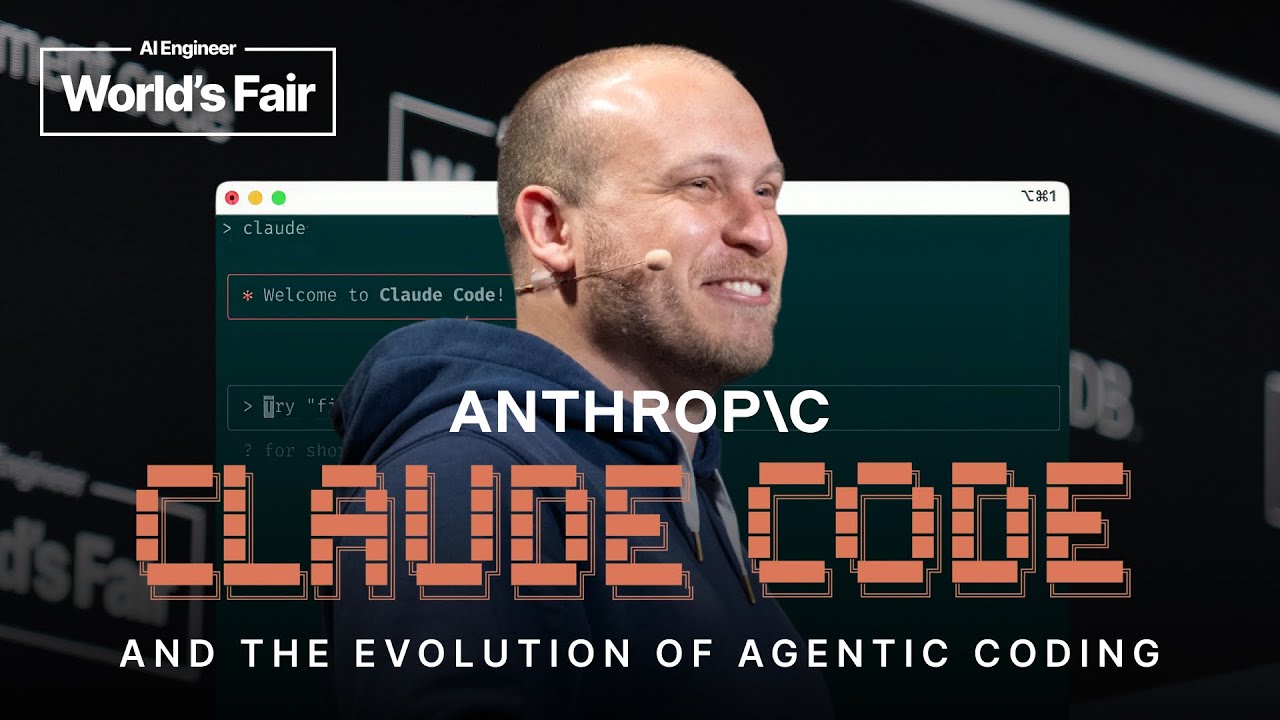
The Evolution of Programming UX: How Claude Code Is Reshaping Developer Experience
The world of programming has undergone a dramatic transformation, evolving from the era of physical punch cards to today’s sophisticated AI-assisted development environments. As programming languages begin to plateau, the user experience (UX) of programming is evolving exponentially, creating new opportunities and challenges for developers. This article explores the historical journey of programming interfaces, highlights the impact of AI tools like Claude Code, and provides insights into the future of software development.
This guide is designed for developers, engineering teams, and anyone interested in the future of software development. We’ll delve into how AI is reshaping developer experience and what best practices can help you stay ahead.
The Historical Journey of Programming Interfaces
The evolution of programming interfaces is a story of continuous abstraction and increasing user-friendliness. From the earliest days of computing to the advent of modern IDEs, each step has aimed to make programming more accessible and efficient.
From Hardware to Software (1930s-1970s)
In the early days of computing, programming was a physical endeavor. Switchboards and punch cards were the primary means of interacting with computers. As Boris Cherny, the creator of Claude Code, notes, his grandfather was one of the first programmers in the Soviet Union, bringing stacks of punch cards home. These physical constraints shaped early programming paradigms, requiring a deep understanding of hardware.
The emergence of assembly language and higher-level languages like COBOL marked a significant shift from hardware to software. This abstraction allowed programmers to focus on logic rather than the intricacies of machine code.
The Text Editor Revolution (1970s-1990s)
The introduction of text editors revolutionized the programming workflow. Ed, the first text editor, was a simple yet transformative tool. As Cherny points out, Ed lacked many features we take for granted today, such as a cursor or scrollback. Yet, it represented a significant step forward from punch cards.
Vim and Emacs, which came later, brought more advanced features and customization options. These text editors transformed programming workflows, allowing developers to write and edit code more efficiently.
The Graphical Revolution in Programming
The advent of graphical user interfaces (GUIs) marked a turning point in the history of programming. GUIs made computing more accessible and intuitive, paving the way for modern development environments.
Smalltalk-80: A Pioneering Achievement
Smalltalk-80 was a pioneering object-oriented programming environment that introduced the first graphical interface for programming. Developed in the late 1970s, Smalltalk-80 featured overlapping windows, integrated development tools, and live coding capabilities.
One of Smalltalk-80’s most remarkable features was its live reload capability, which allowed developers to see changes in real-time. This innovation was ahead of its time, as modern development environments still struggle to achieve the same level of seamlessness.
The IDE Evolution (1991-2020)
The introduction of Visual Basic in 1991 brought a graphical paradigm to mainstream programming. Visual Basic made it easier for developers to create applications with visual interfaces, opening up new possibilities for software development.
Eclipse introduced type-ahead functionality, using static analysis to index symbols and provide intelligent code completion. This feature, along with Eclipse’s third-party ecosystem, transformed developer productivity. Modern IDEs provide features like syntax highlighting, code navigation, version control integration, and real-time error checking, all within a visually rich environment.
The AI-Assisted Programming Era
The rise of AI has ushered in a new era of programming, where AI tools augment and enhance developer capabilities. AI-assisted programming promises to make software development more efficient, accessible, and innovative.
The GitHub Copilot Breakthrough
GitHub Copilot marked a significant breakthrough in AI-assisted programming. By providing single-line and multi-line code completion, Copilot demonstrated the potential of AI to automate repetitive tasks and accelerate development workflows.
Copilot’s impact lies in its ability to augment rather than replace developers. It assists with code generation, allowing developers to focus on higher-level tasks such as architecture and design.
Claude Code’s Approach to AI Programming
Claude Code takes a unique approach to AI programming, emphasizing simplicity, flexibility, and integration with existing developer tools. Its terminal-first, unopinionated design philosophy aims to provide developers with low-level access to AI models without imposing rigid workflows.
Claude Code offers multiple interaction modes, including terminal, IDE, and GitHub integration. This flexibility allows developers to use Claude Code in a way that suits their individual preferences and workflows. As Cherny states, the goal is to get out of the way and let developers experience the power of AI models directly.
Best Practices for AI-Assisted Development
To maximize the benefits of AI-assisted development, it’s essential to adopt best practices for using tools like Claude Code. These practices focus on teaching the AI, leveraging plan mode, and using memory features effectively.
Effective Use of Claude Code
To effectively use Claude Code, consider the following tips:
- Teach tools to the AI: Provide Claude Code with access to your existing tools and libraries. This allows the AI to leverage your existing infrastructure and workflows.
- Leverage plan mode: Use plan mode to have Claude Code generate a plan before executing code. This allows you to review the AI’s proposed actions and provide feedback.
- Use memory features effectively: Claude Code’s memory features allow you to store and recall information, enabling the AI to learn from past interactions.
Test-Driven Development with AI
AI can transform traditional test-driven development (TDD) practices. By writing tests before implementation and using AI assistance for iterative development, you can improve code quality and reduce bugs.
- Write tests before implementation: Use Claude Code to generate unit tests based on your requirements.
- Iterative development with AI assistance: Use Claude Code to generate code that passes your tests.
- Verification and validation strategies: Use AI to verify and validate your code, ensuring that it meets your requirements.
Future Trends and Implications
The future of programming is intertwined with the exponential growth of AI capabilities. As AI models become more powerful, the challenge lies in building products that can leverage their full potential.
The Exponential Growth of AI Capabilities
AI models are improving at an exponential rate, outpacing the ability of product development to keep up. This creates a gap between what AI can do and what developers can achieve with existing tools.
To prepare for future developments in AI-assisted programming, developers should focus on:
- Multi-agent workflows: As AI becomes more capable, developers will need to manage multiple AI agents working in parallel.
- Memory and context management: AI models will need to remember and understand context over long periods of time.
- Integration with existing tools and practices: AI tools will need to integrate seamlessly with existing developer workflows.
Conclusion
The evolution of programming UX is a continuous journey, driven by technological innovation and a desire to make software development more accessible and efficient. AI-assisted programming represents the latest chapter in this evolution, promising to transform the way developers work.
By embracing AI tools like Claude Code and adopting best practices for AI-assisted development, developers can unlock new levels of productivity and innovation. The future of programming is here, and it’s powered by AI.
Keywords: Claude Code, AI Programming, Developer Experience, Programming UX, GitHub Copilot, IDE Evolution, Agentic Coding, Test-Driven Development, Software Development, Programming History, Boris Cherny, AI Tools, Code Automation, Developer Productivity, Programming Interfaces, AI-Assisted Development, Future of Programming
Let me hear what you have to say